Black paint looks like a mirror when it is right, and like a crime scene under the wrong light. Anyone who details black cars regularly learns to chase defects at two levels: what you can see in shade and what jumps out under direct sun or LED inspection. Swirls, holograms, DA haze, rotary trails, towel marring, micro-marring from aggressive compounds, and water-spot etching sit on a spectrum. The trick is not only removing them, but avoiding putting them in during wash and finishing steps. That is where most owners and even some pros go wrong.
This piece draws on years of exterior detailing and paint correction work on black vehicles, from daily drivers to garage queens. Shop lighting, pad choice, compound chemistry, pressure control, and even the order of rinses all affect the result. So do the conditions in which you wash and dry the car. I have seen an immaculate correction undone by a single windy wash with a gritty drying towel. Black paint is unforgiving, but predictable once you control the variables.
Why black shows everything
Optically, black paint reflects light without the distraction of color. Any micro-scratch interrupts the reflection and becomes visible as a swirl or tick mark. Softer clear coats, found on many modern vehicles, make things worse. Even a plush towel can introduce micro-marring if lubricity is insufficient. The same goes for tapered foam finishing pads that dry out after a few passes. Pair that with direct sun and you see holograms that seem to float as you move your head. They are not illusions, they are machine trails aligned with pad movement.
Weather and local water conditions matter. In areas with mineral-rich water, slow drying causes deposits that etch into clear coat, especially on hot black panels. Even a quick detailer cannot always hide that type of damage. It takes patient compounding, measured passes, and the right finishing polish to reset the panel.
The foundation: wash technique that does not mar
Most of the swirls that owners blame on “cheap paint” show up at the wash stage. Good technique reduces how much paint correction you need later, which matters on thin clear coats. Factory clear can measure between about 35 and 60 microns on many modern cars, with only a portion of that safely polishable. Burn through that window and you create a permanent thin spot that behaves differently across the panel.
Skip the foam cannon theatrics if the basics are off. What matters more is lubricity, contact control, and cleaning order. Pre-rinse to remove loose grit, then a proper contact wash with a high-lubricity shampoo. I prefer a single premium wash bucket paired with a hose-mounted rinse sprayer, not the classic two-bucket method, when speed matters and the mitt gets rinsed thoroughly after each small section. A mitt that never touches the bottom of a bucket carries less grit. Break the car into small zones, re-wet often, and keep the panel cool. The less distance the mitt travels before a rinse, the fewer chances to drag grit and create pigtails.
Drying is where many cars get their first scratches. Forced air is the safest path. If towels are necessary, choose edgeless, high-GSM towels, fold frequently, and use a drying aid that provides slip. Mist the towel lightly, not the panel, to avoid streaking on hot black paint. Work in straight lines and let the towel float with minimal pressure. If the towel feels grabby, stop and re-wet the surface. A spritz of deionized water before the final pass can prevent mineral spotting in areas with hard water.
Decoding swirls versus holograms
Swirls are random, circular micro-scratches visible under ambient light. Holograms are machine-induced trails that appear as sweeping patterns under point light or sun. They typically come from rotary polishing, aggressive cutting compounds, or contaminated pads. You might remove swirls with a dual-action polisher and a medium polish. Holograms demand a proper finishing step with a pad and polish that can refine the micro-structure you created during cutting.
On a black SUV in Goleta last spring, the owner complained about “streaky wax.” It was not wax at all, it was hologramming from a prior rotary cut left unfinished. A short two-step with a microfiber cutting pad and a fine finishing pad solved it. The lesson: finish your finish. If you cut hard, re-level gently with a dedicated finishing cycle using minimal pressure and a polish designed for zero-filler clarity.
Choosing tools and pads without creating new defects
Tool choice does not guarantee a result, but it sets the ceiling for how clean your finish can be. A free-spinning dual-action polisher is the safest standard. A forced-rotation DA provides more cut but needs lighter pressure during finishing to prevent haze. A rotary still has a place on hammered paint or for edges, but a rotary without a perfect finishing stage is a hologram generator on black.
Pads and polishes matter as much as the machine. Microfiber cutting pads remove defects efficiently, but they heat the panel and can leave DA haze on soft clears. Medium foam pads paired with a diminishing-abrasive polish often strike a better balance. Finishing pads with ultrafine polishes do the final refinement. Clean and rotate pads constantly. After two or three sections, blow out the pad with compressed air or brush it thoroughly. A loaded pad scratches, then loads faster, which compounds the damage. Aim for pad face temperatures that do not exceed warm to the touch. If you cannot leave a finger on the pad for a few seconds, you are building heat.
Safe paint correction process for black paint
I like an incremental approach. Start mild, escalate only as needed, and dial back quickly once you have defect removal. Try a test spot that includes several types of defects and panel curvature. Walk the result into direct sun or hit it with a high-CRI inspection light.
A typical sequence goes like this: decontaminate chemically with an iron remover on cool panels, then mechanically with a fine clay or synthetic mitt lubricated heavily. The clay step can introduce micromarring, so you must plan to polish after claying. If the paint is soft, consider skipping mechanical decon and relying more on iron remover plus multiple lubricated wash passes. After claying, take paint depth readings if you can. Check edges and body lines, which are thin and easy to burn.
Correction begins with a medium foam pad and a low-dusting polish. Work a small section, three to four slow passes, minimal pressure. Wipe down the residue with a plush towel and a panel prep that does not bite too hard. Inspect. If 70 to 80 percent of the defects lift, refine with an ultra-fine combo and leave it. If deep swirls and random isolated deep scratches remain, step up to a microfiber pad and a more aggressive compound, then follow with your finisher. The hobbyist mistake is doing the entire car with an aggressive combo because it feels productive. On black paint, that sets you up for holograms or haze that will haunt you at delivery.
Lighting that tells the truth
Detailing black paint without honest lighting is like painting a room at dusk. You will miss things. Overhead diffused light helps with general coverage. For swirl detection, a single intense point source reveals defects that disappear under soft light. A handheld LED with adjustable lumens and a color temperature around 5000 to 6500 K works. For holograms, step outside into sunlight. I have also found that a low-angle, warm halogen can show trails that cold LEDs miss. The method matters more than the brand: move the light, change angles, and inspect from door gaps to the crown of the panel.
Hugo's Auto Detailing: what we change when the car is black
At Hugo's Auto Detailing, black cars get a different pacing from the moment they roll in. We lengthen pre-wash dwell time, use softer foam cannons and lower PSI at the wand, and stage larger towel rotations for drying. Our exterior detailing checklist includes extra inspection breaks between compounding and finishing; the tech doing the finish step has not done the cut. Fresh eyes see trails that the cutter’s brain filters out. We also pin a test panel to establish a “finishing recipe” before committing to the rest of the car, so the work is repeatable panel to panel.
In coastal towns like Carpinteria and Summerland, windblown grit matters. If a Santa Ana event is pushing dust across the lot, we reschedule exterior detailing or move the wash indoors. It is cheaper than re-polishing a hood because airborne grit bonded to a drying towel. Those are the calls that protect black paint in real conditions.
The wash, decon, and polish choreography that prevents rework
Certain sequences reduce rework. After the first contact wash, blow out seams and mirrors with compressed air, then let the car sit for five minutes. Drips will reappear from badges and trim. Pat them dry before you clay. When you clay a black car, do it on a wet panel with a dedicated clay lube, not just soap solution. Clay the top half of a panel, rinse, re-lube, then the bottom half. Do not carry lower-panel grit up to the shoulders and hood.
During correction, mask soft trim and edges, especially on older vehicles where trim can smear. Run a perimeter pass with a small pad around badges and door handles before tackling the broad panel. That keeps your large pad from loading and dragging contamination across the panel. After compounding, vacuum and wipe the work area to keep dust out of finishing pads. That ten-minute housekeeping step can save an hour of hologram chasing.
Finishing polish discipline: pressure, speed, and pad priming
Holograms often come from the finishing step, not the cut. A finishing pad needs to be primed, not drenched. Work the polish until it is nearly clear, but do not dry buff. Use a slower machine speed, lighten pressure until the pad just kisses the paint, and extend your arm speed slightly to avoid micro-marring on softer clears. If a panel fights you, switch pad materials rather than forcing the same combo. For example, if a yellow foam pad leaves faint trails on a particularly soft black sedan from Montecito, drop to an ultra-soft pad with an oily finishing polish that has finer abrasives. Some paints, especially certain Japanese and German clears, respond differently panel to panel. Stay flexible.
Wipe-off technique matters. Use a fresh, ultra-soft towel and flip constantly. If residue feels grabby, mist your towel with a little panel prep. Dragging a dry towel across a freshly finished black panel is an easy way to install the faintest haze that only shows under the sun.
Sealing the result: wax, sealant, or ceramic coating
Protection does not create gloss by itself, it preserves it and enhances clarity by smoothing the surface. Natural wax looks warm on black but lacks longevity, especially near the coast. Modern sealants and ceramic coatings provide better protection against wash-induced marring, but they are not armor. A ceramic coating reduces surface energy, making dirt release easier, and it can hide the smallest of towel marks in everyday light. It does not hide holograms. If the finish is not perfect before coating, the coating locks in those defects.
For marine environments, the calculus changes. Boats live in UV and salt. Marine detailing and Boat ceramic coating require different chemistry designed for gelcoat. Do not put automotive coatings on gelcoat and expect the same durability. If you cross-train between Car detailing service and Boat detailing service, keep your pads and towels segregated. Gelcoat dust is coarser and can contaminate your automotive finishing pads, which is a quick path to micro-marring on black car paint.
A case from the field: when “soft” means really soft
We had a black coupe from Hope Ranch that had lived under cover, washed infrequently, and never machine polished. Under inspection, the paint looked clean but absolutely loaded with fine wash marring and mineral spots. Traditional compounding would have removed the defects quickly, but we measured thin clear on the hood, https://sergiofmja952.cavandoragh.org/summerland-car-detailing-coastal-care-for-salt-and-sun about 70 to 80 microns total with a conservative polishable window. We opted for a long-cycle diminishing polish on a medium foam pad and did two gentle sets instead of one aggressive cut. The hood finished properly, but the driver door showed faint haze under a spot light. Switching to a different finishing polish with more lubrication solved it. The owner later said it was the first time the car looked better in direct sun than in the garage. That outcome hinged on restraint.
Maintenance that keeps black paint black
Owners ask how to keep swirls from returning. You cannot freeze a car in time, but you can slow the process.
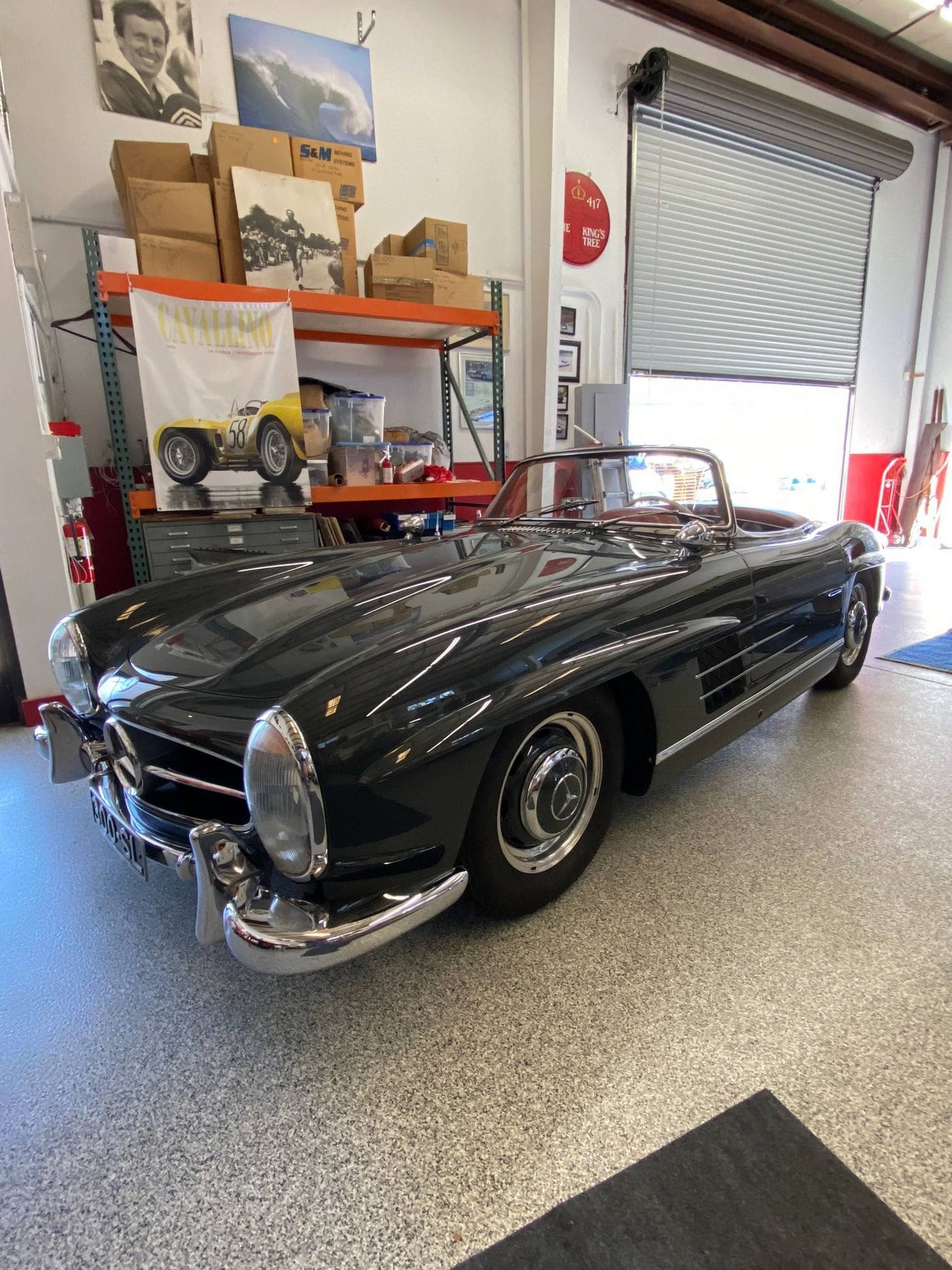
- Wash in shade with cool panels, heavy lubrication, and clean mitts. Use forced air and soft towels with a drying aid. Top your sealant or coating with a compatible spray sealant after every wash to restore slickness. Use separate towels for body, lower panels, and wheels. Retire towels early. Skip automatic brushes. If you must use a touchless wash, bring your own drying method to avoid their towels. Address water spots quickly with a dedicated remover or a gentle polish before they etch.
Those five habits cut new marring by a wide margin. Even with perfect habits, plan on periodic light machine polishing. Think of it like sharpening a blade: remove as little material as necessary to restore clarity.
Hugo's Auto Detailing on finishing black cars in Carpinteria, Montecito, and Goleta
Regional nuance matters. In Carpinteria and Goleta, morning marine layer keeps panels cool, which helps with wash and polish control, but afternoon sun can spike temperatures quickly. At Hugo's Auto Detailing, we schedule black cars early, when ambient temps sit between roughly 60 and 70 degrees, and we keep panels below the point where polishes flash prematurely. In Montecito and nearby Summerland, oak pollen can float onto freshly polished paint. We stage a filtered-air cure space so coatings set up without debris. Little operational habits like these make the difference between an 8 out of 10 and a car that looks liquid under a streetlamp.
We also separate Interior detailing from exterior work on black cars on the same day. Interior dust migrates. If the interior needs heavy work, we finish machine polishing first, then mask openings during interior vacuuming, or split the job across days. Running a HEPA air scrubber in the bay during the final wipe keeps finishing towels cleaner and reduces the chance of micro-marring from airborne grit on dark paint.
When paint correction becomes preservation
Paint correction is not a trophy sport. On some black cars, especially older repaints or vehicles with thin factory clears, the best approach is partial correction. You aim for visual clarity in sun without chasing every last RIDS. Removing 80 percent of defects while keeping future correction cycles available is often smarter than 95 percent in one go. That decision requires measurement, experience, and a conversation with the owner about how they use the car. A Hope Ranch daily commuter that sees street parking and weekly washes needs durability and easy maintenance. A garage-kept weekend car in Montecito can justify an extra refinement step if the clear supports it.
Where boat and car workflows intersect, and where they diverge
People who run both Marine detailing and car work sometimes mix techniques. Black automotive paint and white gelcoat behave differently. Gelcoat can take aggressive compounding without the same risk of strike through because it is thick, but it also hides micro-marring better in everyday light. The reverse is true for black car paint: thin, sensitive, and brutally honest under the sun. Keep your abrasives, pads, and expectations segregated. The discipline you learn on black cars will make you a better boat detailer, not because you transfer products, but because you learn to control dust, heat, and wipe-off like a surgeon.
Telltale mistakes that create holograms
A few errors show up over and over. Running a rotary with a wool pad for speed, then trying to hide trails with glaze, is one. Finishing with too much pressure to “force” clarity is another. Using a finishing polish after it has flashed and dried on a hot panel leaves micro-marring. Wiping compound with a short-pile towel you used on wheels last month is a special kind of self-sabotage. Finally, skipping the follow-up inspection outside is how holograms reach delivery day. Always check the car in sun or under a daylight-matched spotlight from multiple angles.
Coatings and black paint: what changes in the prep
Coatings magnify prep mistakes. On black cars, that means you spend more time on panel prep and oil removal. Use a panel wipe that flashes clean without dragging the towel. Do not overuse it, because some strong preps can soften and haze fresh finishes if you soak the panel. One or two mists per 2-by-2 section, gentle wipe, and a second plush towel to level. Then, coat in small sections and level immediately. High spots show dramatically on black. If you see smears after three minutes, you waited too long or the room is too warm. Keep your windows consistent. Many coatings set at 2 to 4 minutes at room temperature. Adjust for humidity and temperature, and test on a sacrificial panel or lower bumper section before you touch the hood.
Practical differences across vehicle types
Panel geometry influences your finish. High-crown hoods generate more heat in the center with a DA. Door edges and body lines are thin, so pressure must be feather-light. Pillars, painted gloss trim, and piano black plastics scratch if you look at them wrong. Machine polish those with the softest pad and the gentlest polish, or hand polish if the plastic is extremely delicate. If you are doing a Car detailing service on an SUV with roof rails, pull or mask the rails to avoid pad catch and edge marring. And if you work outdoors, factor wind. A gust can drop grit on the panel between your compounding and finishing passes, which shows up as fresh haze. One solution is to finish an entire panel immediately after cutting it, rather than compounding the whole car then circling back, if conditions are dirty.
The quiet work that prevents swirls after delivery
After a black car leaves the bay, the next wash either preserves or erases your effort. Provide owners a brief, specific routine. Two buckets or a single-bucket-plus-constant-rinse method, a soft mitt, forced air or ultra-soft towels, and a drying aid. Recommend a touch-up spray and safe towels for quick dust removal, but warn against dry dusting. Suggest a schedule: weekly gentle washes, monthly sealant boosts if not coated, and quarterly inspections for early etching. If a customer mentions they use a soft brush, replace it with a mitt. If they park under sprinklers, encourage a rinse and dry the same day. Small nudges keep the paint looking right longer.
Closing thoughts from the polishing bay
Black paint demands respect. It shows every shortcut and rewards the patient. The steps are not mysterious, just disciplined. Clean contact, cool panels, appropriate abrasives, honest lighting, gentle finishing, and protection that suits the way the vehicle lives. Whether you are working on a daily in Goleta, a showpiece in Montecito, or a weekend cruiser from Summerland, the pattern holds. When done right, a black car looks like poured ink in the shade and glass in the sun, with no swirls or holograms dancing across the panel, only true reflections. That is the benchmark worth chasing, one controlled pass at a time.